



The Covent Garden Church of St Paul's
The Covent Garden church of St Paul’s has, for four hundred years, witnessed and enhanced the buzz and bustle of the beating heart of London. It has served as a nucleus for local artisans, actors, entrepreneurs, printers and publishers, film studios and creative industries. It has hosted monarchs, aristocrats and vegetable traders; set the scene for Charles II’s legendary orange-selling mistress, Nell Gwynne; featured in Hogarth’s etchings; served as a place of worship for craftsmen like Grinling Gibbons and Thomas Chippendale; been a rallying point for candle-lit street protest marches in the 1970s and become indelibly associated with London’s surrounding theatrical world.
The new bespoke church furniture now allows the building to stay relevant, generate revenue, be efficient to operate, whilst at the same time enable and enhance modern liturgy, as well as other secular purposes.
Its connections with the theatre began almost 200 years ago and, the church has continued to be a venue of discreet memorials to actors of eminence since the 18th century, including Dame Ellen Terry and Dame Edith Evans, Sir Charlie Chaplin, Sir Noel Coward, Sir Laurence Olivier, Gracie Fields, Stanley Holloway, Boris Karloff, Vivien Leigh, Ivor Novello, Kenneth More, Margaret Rutherford, Anna Neagle and Diana Rigg.
Its distinctive East portico became indelibly associated with the fictional meeting between Eliza Doolittle and Henry Higgins in Bernard Shaw’s play ‘Pygmalion’, which was later turned into one of the greatest stage and film musicals of all time, ‘My Fair Lady’.
Like many modern parishes, today’s church has been forced to find a balance between articulating its original religious purpose in an increasingly secular age and the rigours of economic survival. This means, essentially, the generation of revenue. The church has no parish hall but does have good acoustics and a fine organ - a perfect venue for lunch-time and evening concerts, plays, lectures, flower-festivals, as well as memorials and weddings.
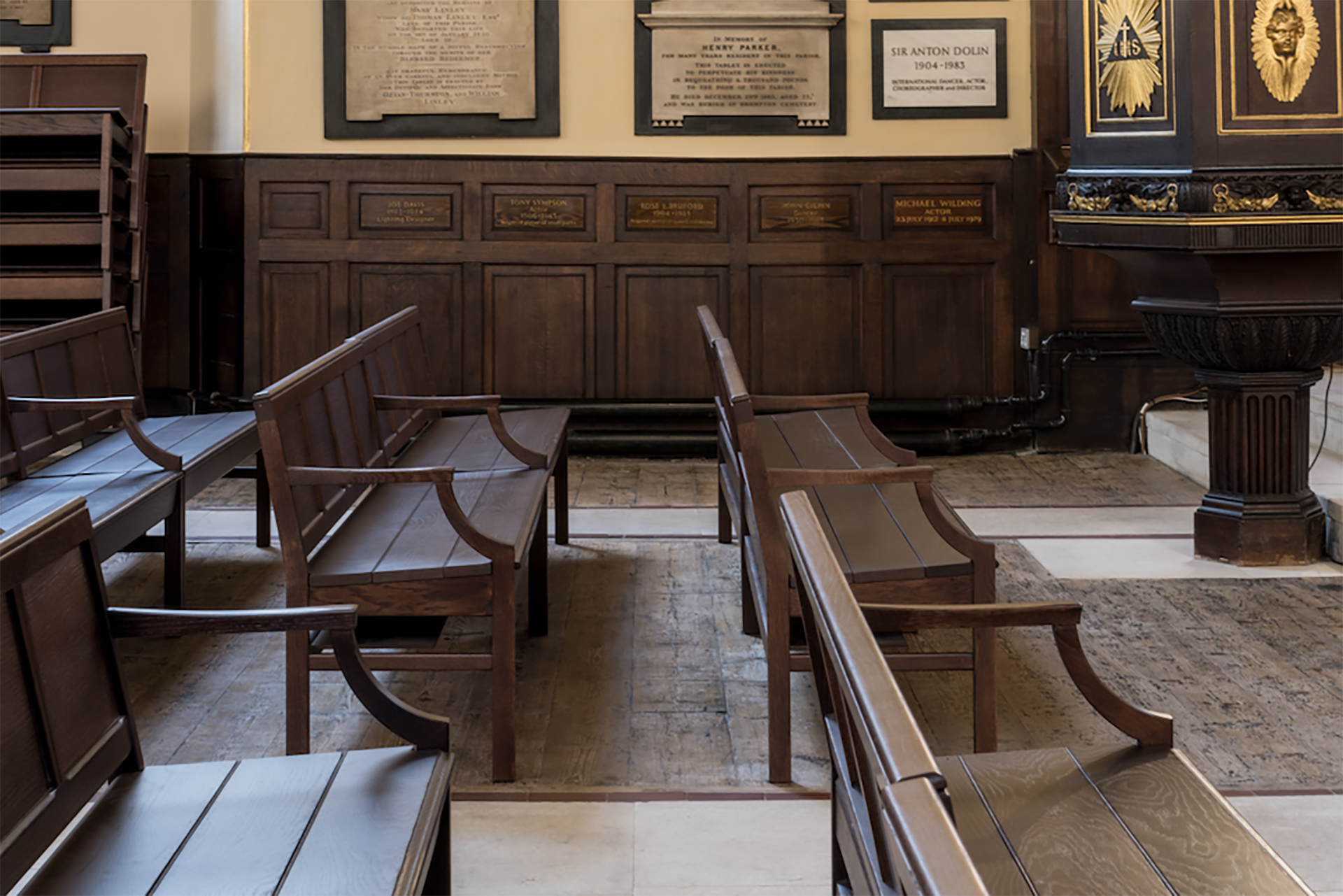
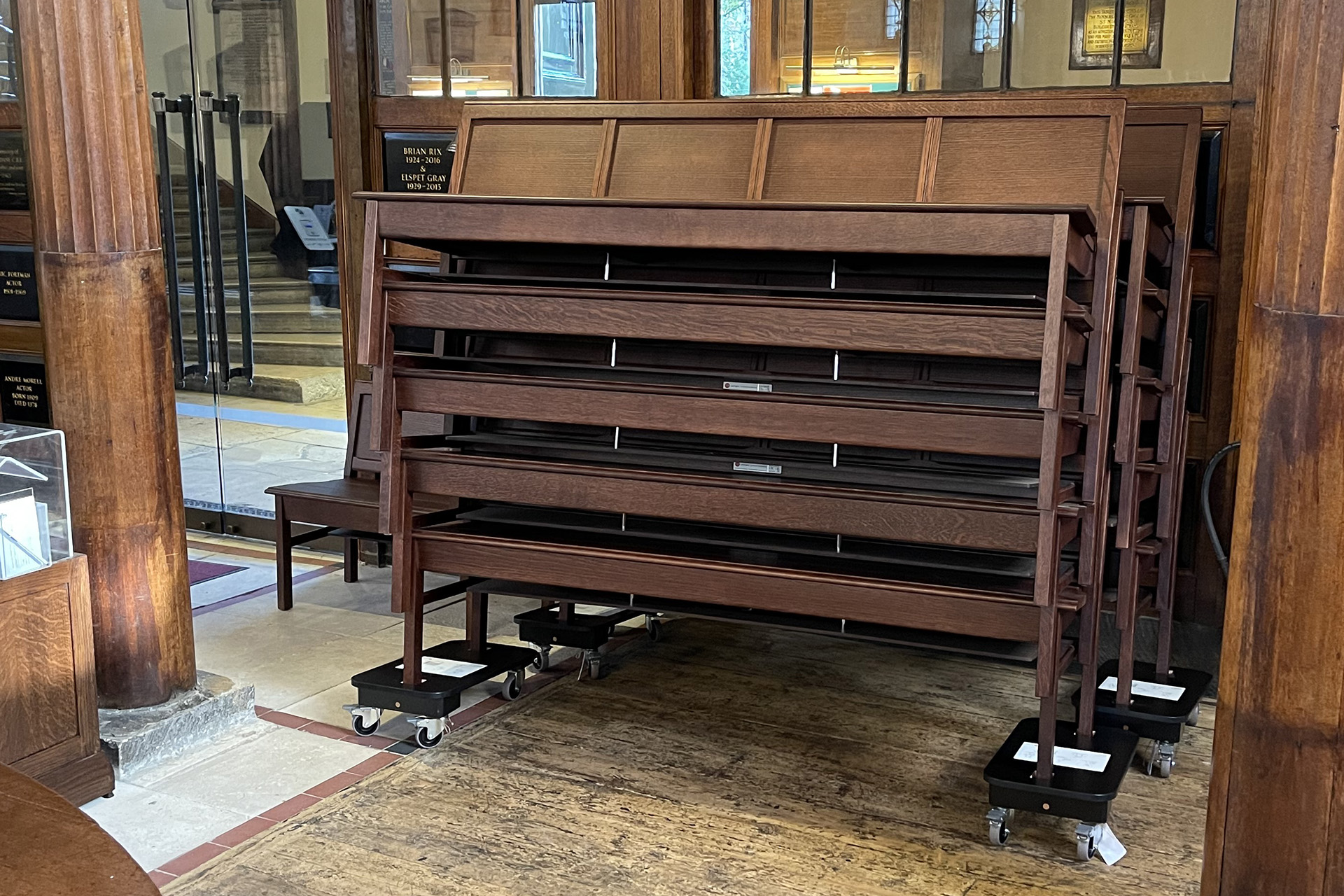
Luke Hughes was commissioned to design and make new seating for 300 (using a version of our stacking pew concept), new choir music desks, clergy seating and wainscot cladding (to disguise the bar and kitchen servery). Further works include remodelling the pulpit, a new crucifix and a set of gilded walnut candle-stands to sit behind the altar on the reredos.
Intriguingly, one of the livelier recent social events was the celebration of the 90th birthday of Mark Girouard, the former architectural editor of Country Life, a party that was attended by most of the nation’s distinguished architectural historians along with Inspectors from Historic England. Even their combined acute visual antennae barely noticed how, in less than fifteen minutes before they arrived, the church pew benches had been cleared away, stacked on storage dollys and neatly aligned against the wainscot.
